
Reviewed · METROPOLITAN MUSEUM & ART TOURS
Private Art and Crime Tour at the Metropolitan Museum of Art
The most unusual thing about this private Met tour is its subject: not simply great art, but the crimes, mistakes, and detective work behind great art. You look at questionable objects, famous artists whose work is often forged, and cases involving stolen or looted pieces.
I like the focus on Rembrandt and Van Gogh, since their names make the problem of forgery easy to understand. I also like the private format, which gives your group a chance to ask direct questions instead of following a large crowd. The main drawback is sound: Olga, one guide associated with the tour, was sometimes hard to hear, and her accent made parts of the explanation difficult for one participant to catch.
In This Review
- Key points to know
- Why art crime makes the Met more interesting
- The Metropolitan Museum of Art as your only stop
- Questionable holdings and the problem of authenticity
- Rembrandt and Van Gogh, two famous names in the forgery trade
- Stolen art, looted objects, and the road back home
- Olga and the value of an art historian’s guidance
- What the private format changes
- Who will enjoy this Met experience most
- Timing, cancellation, and planning your visit
- Is the tour worth booking?
- FAQ
- Where does the Private Art and Crime Tour begin?
- Where does the tour end?
- How long does the tour last?
- Is museum admission included?
- Is this a private tour?
- Is the tour offered in English?
- Does the tour include hotel pickup or drop-off?
- Are gratuities included?
- Is the tour near public transportation?
- What is the cancellation policy?
Key points to know
- Art crime takes center stage: Examine questionable Met holdings, forged works, stolen objects, and repatriation cases.
- Rembrandt and Van Gogh feature prominently: See authentic works by artists whose names are often used in the forgery trade.
- A professional art historian leads the visit: Olga has received particular praise for her command of art and museum history.
- Only your group participates: The private setup suits adults, serious art fans, and older high school students.
- The visit lasts about 2.5 hours: The museum portion is listed as roughly two hours, with the full experience taking about half an hour longer.
- The Met entrance is included: You meet at 1000 Fifth Avenue and finish back at the same place.
Why art crime makes the Met more interesting
Most museum tours ask you to admire paintings. This one asks you to question them. That small change makes a big difference.
You will consider why an object is accepted as genuine, how a museum investigates a doubtful work, and what happens when new evidence challenges an old attribution. The tour also looks at objects that entered the museum under questionable circumstances, giving you a more realistic view of museum work than the usual parade of famous names.
The subject reaches beyond simple forgery. You will hear about stolen and looted works, including cases in which art was returned to the museum or to its rightful owners. That brings ethics, law, wartime loss, private collecting, and public trust into the conversation.
I like this approach because it helps you see museums as working institutions, not perfect vaults. A collection can contain masterpieces, disputed pieces, objects acquired under older standards, and works that require years of research. The tour gives you a way to think about all of them.
More Met and art museum visits:
- NYC: Museum of Modern Art (MoMA) Entry Ticket
★ 4.6 · 12,540 reviews - NYC: Guggenheim Museum Entry Ticket
★ 4.4 · 2,201 reviews - Metropolitan Museum Guided Group Tour
★ 5.0 · 1,013 reviews
The Metropolitan Museum of Art as your only stop
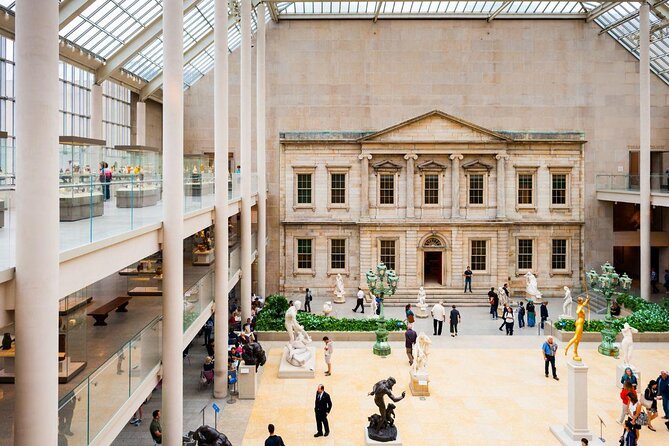
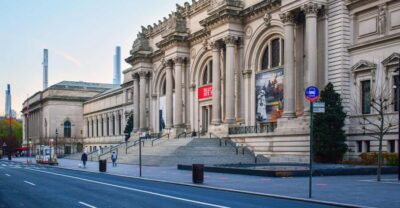
The tour takes place entirely at The Metropolitan Museum of Art, at 1000 Fifth Avenue. You do not spend the time traveling between galleries or attractions. Instead, the guide uses the museum itself as the setting for an investigation into authenticity and ownership.
The advertised museum visit is about two hours, while the full activity lasts approximately two and a half hours. That is enough time for a focused route, but not enough to cover the Met as a whole. You should not expect a general survey of Egyptian art, European painting, American rooms, and every major gallery.
That limited scope is a strength if you prefer a clear theme. You can spend your time asking why a work is trusted, challenged, or returned. It is less suitable if your main goal is to see as many famous rooms as possible.
Admission fees are included, so you do not need to treat the entrance as a separate expense when judging the tour’s value. The meeting point is also the ending point, which keeps the plan simple. The activity is near public transportation, but hotel pickup and drop-off are not included.
Questionable holdings and the problem of authenticity
The tour examines works in the Met’s holdings that some experts consider inauthentic. That does not mean every object is presented as an obvious fake. The more useful question is how uncertainty enters a collection in the first place.
At a museum, questions can involve the artist, the date, the materials, the workshop, or the chain of ownership. A work may look right but fail a technical test. A signature may seem convincing but belong to a later hand. Records may reveal that an object changed owners in a troubling way.
You will learn about the methods used to separate authentic works from forgeries. The supplied details do not name each test, so you should not expect a fixed laboratory demonstration. Instead, the guide explains the kinds of evidence that help experts reach a judgment.
That process is valuable because it replaces the idea of a magical expert eye with a more careful picture. Art authentication can involve close looking, historical records, comparisons with known works, and technical research. The important point is that a museum’s label can change when the evidence changes.
For you, this adds a new layer to the galleries. Instead of asking only if you like a painting, you can ask what supports its attribution. That habit will serve you in any museum, auction house, or antique shop.
Rembrandt and Van Gogh, two famous names in the forgery trade
Rembrandt and Vincent van Gogh are singled out because both artists have been heavily targeted by forgers. Their works are famous, expensive, and recognizable, which creates a strong market for convincing imitations.
The tour also includes authentic works by both artists. That contrast matters. You are not studying forgery in the abstract. You are looking at genuine objects while considering how experts tell the real thing from a copy or false attribution.
Rembrandt offers a particularly useful case for discussing authorship because works associated with his name can involve questions about workshop practice, pupils, later attribution, and changing expert opinion. Van Gogh’s distinct style and high market value create a different set of problems for anyone trying to imitate him.
The guide’s job is not simply to point out a famous painting. It is to explain why the object carries its attribution and how that judgment can be tested. If you already know the Met’s major works, this fresh angle may make familiar galleries feel new.
If you are bringing an older high school student, Rembrandt and Van Gogh also provide an accessible entry point. The subject is serious, but the basic questions are easy to grasp: Who made this? When? How do we know? Who owned it before the museum did?
More New York City museums to visit:
- NYC: 9/11 Memorial & Museum Timed-Entry Ticket
★ 4.8 · 31,428 reviews - NYC: Empire State Building Tickets – Observatory & Museum
★ 4.7 · 25,757 reviews - New York City: American Museum of Natural History Ticket
★ 4.5 · 15,447 reviews - 9/11 Memorial, Ground Zero Tour with Optional 9/11 Museum Ticket
★ 5.0 · 6,381 reviews
Stolen art, looted objects, and the road back home
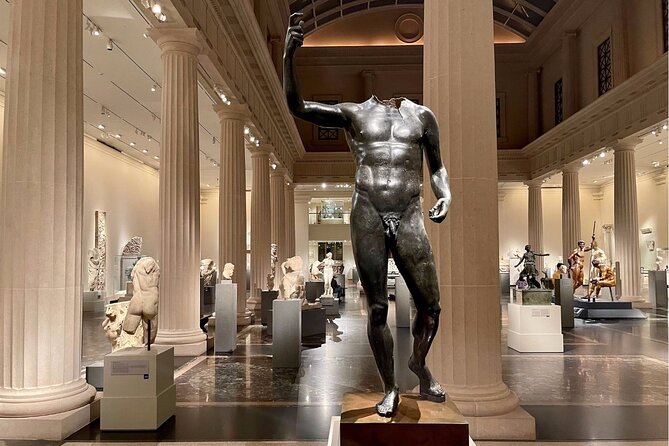
The tour also follows the difficult path of stolen and looted art. You will hear how some works were returned to the museum or to their rightful owners.
This part gives the experience moral weight. A museum object is not just a beautiful thing on a wall. It may have left a family, country, or community through theft, coercion, wartime looting, or a sale that was legal on paper but troubling in practice.
The supplied information does not identify each object or case, so the exact stories may depend on the route and the guide. Still, the subject promises a useful look at repatriation, the process of returning cultural property to the people or institutions entitled to it.
I appreciate that the tour places acquisition and ownership beside aesthetics. You can admire a sculpture and still ask how it reached New York. You can value a museum’s collection and still accept that some pieces may need to go elsewhere.
This is also where a private tour can work well. Your group can pause over a difficult question about ownership or fairness without worrying about holding up a large party. The private format does not guarantee a particular discussion, but it gives you room to shape the conversation.
Olga and the value of an art historian’s guidance
The experience includes a professional art historian as your guide. Olga is specifically praised for her command of art and Met history, along with her ability to recommend other art events around New York.
That last detail is useful if you are building an art-focused visit to the city. You can ask Olga for ideas beyond this one museum, though recommendations are a bonus rather than a formal part of the tour.
A guide with an art history background can connect technical evidence with the larger story. You are not left to read isolated labels about a forged signature or returned object. The guide can explain why the case matters and how it affects the museum’s responsibilities.
There is one practical warning. One participant found Olga difficult to hear at times, with her accent making some points harder to absorb. That does not erase the value of her expertise, but it does matter in a large museum, where background noise and distance can interfere with a spoken explanation.
I would stay close to the guide and speak up if you miss a point. A private group makes that easier. If clear audio is especially important to you, raise the issue at the start and ask the guide to repeat key details when needed.
What the private format changes
This is a private activity, so only your group takes part. That is more than a comfort feature. It changes how the tour can work.
A shared group often has to move at one pace and follow one set of interests. With a private tour, you can give more time to Rembrandt, ask about repatriation, or shift toward the technical side of authentication. The available information does not promise a fully custom route, but the format gives you a better chance to ask focused questions.
Group discounts are available. Since no tour price is provided here, I cannot judge the exact cost against other Met visits. The sensible comparison is the total price for your group, with museum entrance and an art historian included, against the cost of arranging separate admission and a general guide.
For two or three people, a private tour may feel expensive beside a free museum visit. For a family or larger party, a group discount can improve the value. You are paying for a specialist theme and personal attention, not just access to the building.
Gratuities are optional and not included. Hotel pickup and drop-off are also excluded, so plan your own way to Fifth Avenue.
Who will enjoy this Met experience most
I would recommend this tour most strongly to adults with a serious interest in art history, museum ethics, collecting, or forensic research. It also suits older high school students who enjoy questions with no simple answer.
You do not need to be an expert before arriving. The appeal lies in learning how experts build a case. Still, this is not the best choice if you want a light, broad introduction to the Met or a quick checklist of famous masterpieces.
The tour may also suit someone who has already visited the museum. A first-time visitor can see important art through a new lens, but a returning visitor may get even more from the focus on attribution and ownership.
Most people can participate, and the museum is near public transportation. The provided information does not give details about the route, seating, elevators, or wheelchair access, so ask the provider if you have specific mobility needs.
The tour is offered in English. A mobile ticket is provided, and booking confirmation arrives at the time of booking.
Timing, cancellation, and planning your visit
Set aside about two and a half hours for the experience, not just the two-hour museum portion listed in the schedule. Arrive at the Metropolitan Museum of Art meeting point at 1000 Fifth Avenue, since the activity begins and ends there.
Because hotel transportation is not included, you need to arrange your own trip to and from the museum. Public transportation is available nearby, which makes the central meeting point practical for a day in Manhattan.
Free cancellation is available if you cancel at least 24 hours before the experience begins. Cancel later than that and the amount paid will not be refunded. Changes made inside the 24-hour window are not accepted, and the cut-off follows New York local time.
That policy is fairly clear, but it rewards planning. If your schedule depends on weather, a delayed flight, or a changing museum plan, keep the deadline in mind.
Is the tour worth booking?
Book this experience if you want the Met to raise questions, not just provide famous pictures. The focus on questionable holdings, Rembrandt and Van Gogh, authentication, stolen art, and repatriation gives the visit a clear purpose. The private format is especially useful for a family or small group that wants to ask questions freely.
Think twice if you want a general introduction to the entire museum, or if hearing every spoken detail is difficult for you. The sound concern is real, though staying close and asking for repetition may help.
With a 4.7 rating from three reviews, the feedback is positive but based on a small sample. I would treat the strongest evidence as the tour’s unusual subject and Olga’s art history background, balanced against the possible hearing issue. For an art-minded visitor who has already seen the standard Met tour, this is a thoughtful and unusual way to return.
FAQ
Where does the Private Art and Crime Tour begin?
It begins at The Metropolitan Museum of Art, 1000 5th Avenue, New York, NY 10028.
Where does the tour end?
The activity ends back at the meeting point at The Metropolitan Museum of Art.
How long does the tour last?
The full experience lasts approximately 2 hours and 30 minutes. The museum portion is listed as about two hours.
Is museum admission included?
Yes. Entrance fees are included in the tour.
Is this a private tour?
Yes. Only your group participates in the activity.
Is the tour offered in English?
Yes. English is the listed tour language.
Does the tour include hotel pickup or drop-off?
No. Hotel pickup and drop-off are not included.
Are gratuities included?
No. Gratuities are optional and are not included in the tour price.
Is the tour near public transportation?
Yes. The meeting point is near public transportation.
What is the cancellation policy?
You can cancel for a full refund up to 24 hours before the experience begins. Cancellations or changes made less than 24 hours before the start time are not accepted, and the amount paid will not be refunded.
Just listed around New York City
- NYC Midtown Manhattan Highlights Private Walking Tour★ 5.0 · 3 reviews
- Times Square After Dark: the Red Light Secrets Unveiled★ 5.0 · 3 reviews
- New Years Eve Speakeasy Drinks and Ball Drop Tour NYC★ 4.0 · 3 reviews
- Private Transfer to New York Airport (JFK)(LGA)★ 5.0 · 3 reviews
- New York: Guided Walking Tour to Hidden Speakeasies★ 3.7 · 3 reviews
- New York City Private Airport Shuttle/Car Service★ 3.5 · 3 reviews
- Central Park Stolen Archives: NY Exploration Game and Tour★ 5.0 · 3 reviews
- New York: Statue of Liberty and Ellis Island Tour★ 4.2 · 3 reviews
Metropolitan Museum & Art Tours, compared.

“The Met” Metropolitan Museum of Art Exclusive Guided Tour
Read our review →
Browse the lists this tour appears in