
Reviewed · MUSEUMS
Self-Guided Tour of the Museum at Eldridge Street
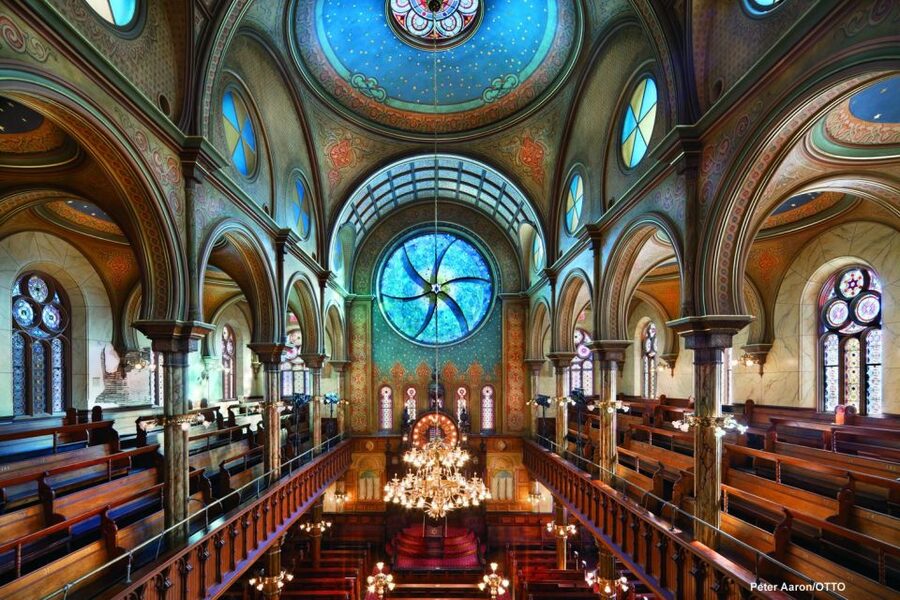
The Museum at Eldridge Street gives you something rare in New York: a look inside the first grand synagogue built in the United States by Eastern European Jewish immigrants. I like the striking Moorish Revival design, and I like that the $7 admission includes both the historic building and temporary exhibits. The 60 stained glass windows and restored interior give you plenty to study.
The main tradeoff is simple: this is self-guided. You get time and freedom, but no live guide is included to explain the building’s symbols or answer questions as you go. If you want a personal tour, this may feel a little quiet. If you prefer to set your own pace, the format works well.
In This Review
- Key points to know before you go
- Entering the 1887 Eldridge Street Synagogue
- Reading the Lower East Side through the building
- Moorish Revival details worth slowing down for
- The 60 stained glass windows
- A modern window by Kiki Smith and Deborah Gans
- How the one-hour visit unfolds
- What the self-guided format does well
- Practical details that affect your visit
- Who will appreciate this museum most
- Is the $7 admission worth it?
- Should you book the Museum at Eldridge Street?
- FAQ
- How much does the Museum at Eldridge Street tour cost?
- How long does the self-guided tour take?
- Is the tour guided?
- What languages are available for the self-guided tour?
- Where is the museum entrance?
- Is the museum wheelchair accessible?
- Can I take photographs inside?
- Can I bring food, drinks, a stroller, or a backpack?
Key points to know before you go
- 1887 synagogue: Enter a National Historic Landmark built by Jewish immigrants during New York’s great age of immigration.
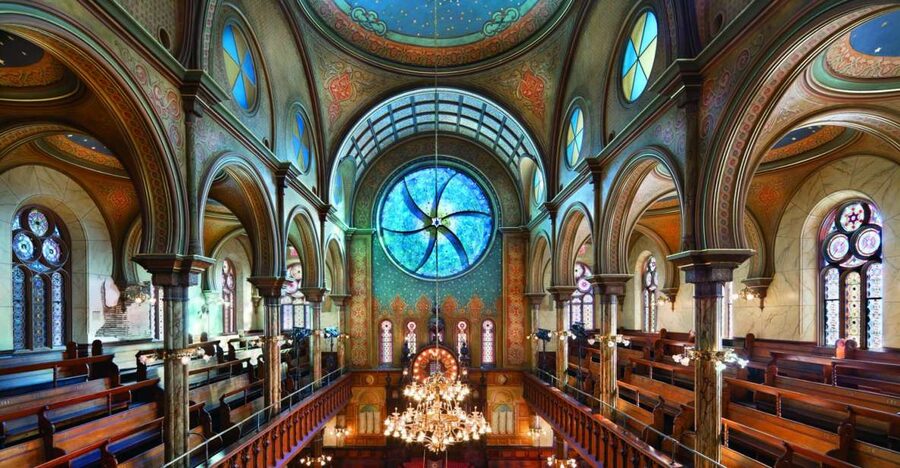
- Moorish Revival design: Look for the building’s distinctive architectural style, created to give the new congregation a grand home on the Lower East Side.
- Sixty historic stained glass windows: The windows are among the most memorable visual details inside the synagogue.
- Modern art connection: A contemporary window by Kiki Smith and Deborah Gans links the building’s past with its present use.
- One-hour visit: Plan on about an hour, though the self-guided format lets you move faster or linger longer where you wish.
- Accessible for all four floors: An elevator reaches every level, and the museum welcomes personal, noncommercial photography.
Entering the 1887 Eldridge Street Synagogue
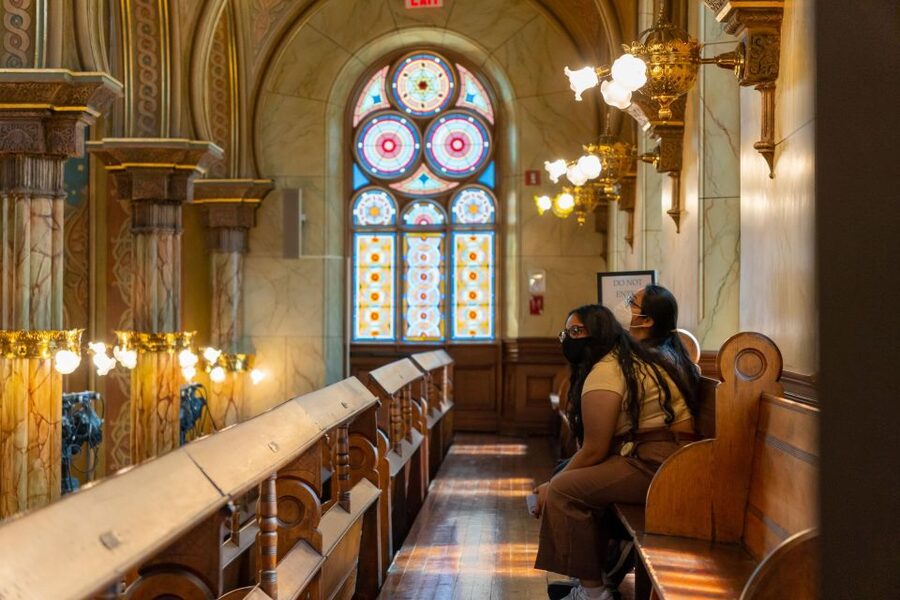
The Museum at Eldridge Street occupies the historic Eldridge Street Synagogue, a building created during a major turning point in New York. Eastern European Jewish immigrants were arriving in large numbers, and this synagogue was built not as a temporary prayer room, but as a permanent community home.
That purpose matters. The building was a place of worship, but it also announced that new Lower East Side residents intended to put down roots. The synagogue’s scale and decoration reflected that ambition. It was a serious investment in a future that many immigrants were still trying to build.
You enter through the main entrance at the bottom of the left-hand downward staircase. The museum is not simply an exhibit installed near an old building. The synagogue itself is the central object, so your first impression comes from the architecture around you.
A staff member or English-speaking greeter is available, but the tour itself is self-guided. You will receive the freedom to move independently rather than follow a fixed group from room to room.
More New York City museums to visit:
- NYC: 9/11 Memorial & Museum Timed-Entry Ticket
★ 4.8 · 31,428 reviews - NYC: Empire State Building Tickets – Observatory & Museum
★ 4.7 · 25,757 reviews - New York City: American Museum of Natural History Ticket
★ 4.5 · 15,447 reviews
Reading the Lower East Side through the building
The museum places the synagogue within the crowded Lower East Side of the late 19th and early 20th centuries. At that time, the neighborhood was filled with packed streets and overcrowded tenements. The synagogue offered a different kind of space, one designed for gathering, worship, and community life.
I find this setting more meaningful than viewing the building as an isolated architectural curiosity. The synagogue’s size makes sense when you consider the number of immigrants building new lives nearby. Its decorative style also makes sense as a statement of confidence.
The museum connects the building to Jewish immigrant traditions and customs. You are not only looking at walls, windows, and ornamental details. You are also learning how a community organized itself and preserved religious and cultural practices in a new country.
The self-guided format lets you spend more time with the subjects that interest you most. You might focus on immigration, architecture, preservation, or the everyday life of the Lower East Side. The drawback is that the experience depends on your own attention. Visitors looking for a detailed spoken explanation may find the visit less satisfying than a guided tour.
Moorish Revival details worth slowing down for
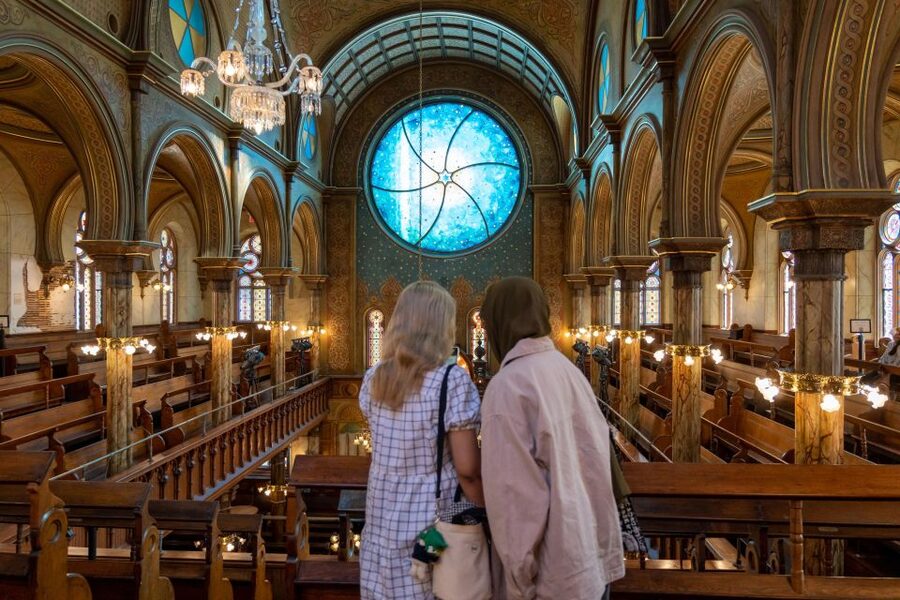
The synagogue’s Moorish Revival architecture is one of the main reasons to visit. This style gives the building an unusual look compared with many other New York landmarks, and it helps explain why the museum feels different from a standard city history exhibit.
Take your time with the decorative details rather than treating the interior as a quick photo stop. The architecture reflects the congregation’s desire for a dignified, impressive home. It also shows how immigrant communities used public buildings to express identity and aspiration.
The building’s scale is especially important. These immigrants were often associated with crowded housing and hard work, yet they created a house of worship with a grand visual presence. That contrast is part of the story the museum wants you to see.
The synagogue later suffered from neglect. Strict immigration quotas in the 1920s changed the neighborhood and reduced the flow of new arrivals. Over time, the building came close to being lost.
That decline gives the restored interior extra weight. You are seeing a building that survived not because its condition remained perfect, but because people eventually committed to saving it.
The 60 stained glass windows
The historic stained glass windows are a major highlight, and the number is impressive: there are 60 of them. They add color and detail to a space already shaped by strong architectural decoration.
I recommend giving the windows more than a passing glance. Look at how they contribute to the atmosphere of the synagogue, then consider the work needed to preserve fragile historic glass in a building that had fallen into disrepair.
The windows also make the museum rewarding for visitors who enjoy architecture but do not want a long, technical tour. You can appreciate their visual effect right away, then read more about the synagogue and its restoration if you want added context.
Personal, noncommercial photography is welcome, so you can take pictures without treating the visit as a strict no-camera museum experience. Flash photography is not allowed, and professional cameras are prohibited. Plan to photograph with a phone or a modest personal camera instead.
A few more New York City picks to weigh up
- An Epic Scavenger Hunt: New York City Central Park Adventure
★ 4.5 · 244 reviews - Skyline Night Bus Audio Narrated Tour Experience
★ 4.5 · 138 reviews - NYC: Metropolitan Museum of Art Guided or Self-Guided Tour
★ 4.0 · 56 reviews - NYC: St. Patrick’s Cathedral Official Self-Guided Audio Tour
★ 3.5 · 45 reviews
A modern window by Kiki Smith and Deborah Gans
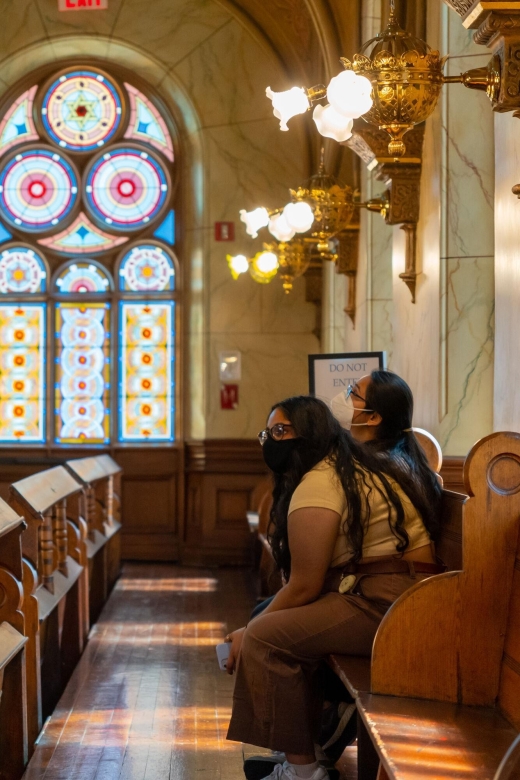
The museum does not present the synagogue as a frozen relic. One of the highlights is a modern window created by artists Kiki Smith and Deborah Gans.
This contemporary addition gives the visit a useful second layer. You can compare a historic sacred space with a newer artistic response to that space. The result connects the synagogue’s original purpose with the museum’s role today.
That connection is valuable because preservation is not only about repairing old materials. It is also about deciding how a historic building can continue to speak to new audiences. The modern window shows that the building still has room for present-day ideas.
If you are mainly interested in the 1887 structure, the modern work may feel like a smaller part of the visit. If you enjoy seeing old and new placed together, it adds a thoughtful contrast.
How the one-hour visit unfolds
A typical visit begins with arrival at the synagogue’s main entrance, followed by admission and orientation from the museum staff. From there, you explore independently rather than joining a guide-led route.
The first part of your visit is best spent getting a feel for the building. Look at the overall design, the Moorish Revival elements, and the way the synagogue’s scale reflects the ambitions of its original congregation.
Next, spend time with the historic windows and the displays covering Jewish immigrant life. The museum explains the rise of the congregation, the changes that affected the Lower East Side, and the building’s decline after immigration rules shifted in the 1920s.
The restoration story is just as important as the synagogue’s original construction. A 20-year restoration project costing $20 million returned the building to public use. That long effort helps you understand why preservation is part of the museum’s central mission.
Finish with the temporary exhibit and permanent collection, along with the modern window by Smith and Gans. Since the visit is self-guided, you can reverse this order or spend less time on sections that do not interest you.
One hour is a sensible estimate for a first visit. You can cover the main points in that time without rushing badly. If you read every display closely or enjoy photographing the architecture, you may want longer, but the listed duration gives you a practical plan for fitting the museum into a Lower East Side outing.
What the self-guided format does well
The strongest part of a self-guided tour is control. You can pause near a window, reread a display, or move on without waiting for a group. That is useful in a historic building where your attention may shift between architecture and social history.
The format also keeps the price low. At $7 per person, admission is modest by New York museum standards, especially since it includes the synagogue, the permanent collection, and the temporary exhibit.
I would call this a good-value stop for visitors who are already exploring the Lower East Side. It is not an all-day museum, and you should not expect a large program of activities for the price. Instead, you are paying for access to an unusual landmark and a focused set of stories.
The main weakness is the lack of a scheduled guide. One visitor specifically wished there had been more guidance, which is a fair concern. The staff are welcoming, and one recent visitor praised their pride in the restored synagogue, but a friendly welcome is not the same as a guided explanation.
Self-guided materials are available in English, Spanish, and Chinese according to the admission information. The host or greeter speaks English. If language support is important to you, confirm the current materials when booking, since the additional activity information lists English separately.
Practical details that affect your visit
The museum is wheelchair accessible, with an elevator reaching all four floors. That makes the building easier to visit than many older landmarks, where stairs can limit access.
Food and drinks other than water are not allowed inside. Food, drinks, strollers, and backpacks may be searched and checked on arrival, so bring only what you need.
Bikes and scooters are not allowed. This is worth remembering if you are moving around New York with a rented bike or scooter and hope to carry it through the museum.
Personal photography is welcome, but keep the rules in mind: no flash and no professional cameras. These restrictions protect the historic setting and help keep the visit comfortable for others.
The experience has free cancellation up to 24 hours before the scheduled time, and you can reserve now and pay later. Those policies make it easier to fit the museum into a changing New York itinerary, though the most important planning point is still the one-hour duration.
Who will appreciate this museum most
I recommend the Museum at Eldridge Street to anyone interested in New York immigration, Jewish American history, religious architecture, or historic preservation. It is also a good choice if you want a short cultural stop that feels tied to the neighborhood around it.
Families may appreciate the manageable length, especially if children can focus on the windows and building details. The self-guided format means you are not locked into a long lecture, though younger children may need help connecting the architecture with the immigration story.
Architecture fans should come for the Moorish Revival design and stained glass. The modern window by Kiki Smith and Deborah Gans adds a contemporary note for visitors who enjoy seeing historic buildings used in current cultural life.
This is less suitable if you want a high-energy activity or a fully narrated tour. It is also not the right choice if you expect a large museum complex with many galleries. The appeal is focused and specific: one important synagogue, its community, its decline, and its careful return to public use.
Is the $7 admission worth it?
For $7, I think the value is strong. You receive access to a National Historic Landmark, 60 historic stained glass windows, the permanent collection, and a temporary exhibit. The visit also gives you a clearer sense of how immigrant communities shaped New York beyond the usual landmarks.
The price works because you are not paying for spectacle alone. You are paying for a building with a clear connection to the people who created it and to the preservation work that saved it.
Still, value depends on what you want. If you need a guide to interpret every detail, you may prefer another museum experience or a guided program when available. If you are comfortable reading and exploring on your own, $7 is an easy amount to justify.
Should you book the Museum at Eldridge Street?
Book it if you want a compact, affordable visit with real historical substance. The synagogue’s Moorish architecture, 60 stained glass windows, immigrant story, restoration, and modern art make it more than a quick look inside an old building.
I would especially recommend it as a one-hour Lower East Side stop for anyone interested in Jewish history or New York’s immigrant past. Go in expecting a self-guided visit, not a personal tour. If that suits you, this restored synagogue offers an unusually direct way to see how a community turned hope for a permanent home into a landmark.
FAQ
How much does the Museum at Eldridge Street tour cost?
Admission costs $7 per person. It includes access to the historic synagogue, the permanent collection, and the museum’s temporary exhibit.
How long does the self-guided tour take?
The stated duration is one hour. Since you explore at your own pace, you may move through the museum faster or spend additional time studying the architecture, windows, and exhibits.
Is the tour guided?
No. This is a self-guided museum tour. An English-speaking host or greeter is available, but the experience does not include a scheduled live guide.
What languages are available for the self-guided tour?
Self-guided materials are available in English, Spanish, and Chinese. The host or greeter language is English.
Where is the museum entrance?
The museum is housed in the historic synagogue. Find the main entrance at the bottom of the left-hand downward staircase.
Is the museum wheelchair accessible?
Yes. The museum is fully accessible, and an elevator reaches all four floors.
Can I take photographs inside?
Yes, personal, noncommercial photography is welcome. Flash photography and professional cameras are not allowed.
Can I bring food, drinks, a stroller, or a backpack?
Food and drinks other than water are not allowed inside. Food, drinks, strollers, and backpacks may be searched and checked on arrival. Bikes and scooters are also not allowed.
Just listed around New York City
- Jewish History of NYC Private Tour with Transfers★ 4.8 · 6 reviews
- Hudson Valley Wine and Food Day Trip with Sommelier host from NYC★ 5.0 · 6 reviews
- Tour of Contrasts in Italian★ 4.0 · 6 reviews
- NYC: Operation Mincemeat on Broadway6 reviews
- The NYC Speakeasy Adventure: A Tipsy Trip Through History★ 5.0 · 6 reviews
- Manhattan’s Famous Artists: Exploration Game and Tour★ 5.0 · 6 reviews
- Chelsea and the High Line NYC Architecture Walking Tour★ 5.0 · 6 reviews
- New York: Holiday Lights Tour with Rockefeller Tree★ 5.0 · 6 reviews
Museums, compared.

Empire State Building Tickets – Observatory & Museum
Read our review →

9/11 Memorial, Ground Zero Tour with Optional 9/11 Museum Ticket
Read our review →

All-Access 9/11: Ground Zero Tour, Memorial and Museum, One World Observatory
Read our review →
Browse the lists this tour appears in