
Reviewed · METROPOLITAN MUSEUM & ART TOURS
“The Met” Metropolitan Museum of Art Tour Semi-Private 8ppl Max
The best thing about this Met tour is that it gives you a plan inside a museum that can feel like a small city. In two and a half hours, your guide leads you from ancient Egypt and medieval armor to Washington Crossing the Delaware, Vermeer, Picasso, and Van Gogh, adding the stories and visual clues that are easy to miss alone.
I like the eight-person limit, which leaves room for questions and lets the guide adjust the route to the group. I also like the reserved entry and included admission, especially if you have only one afternoon in New York. The tradeoff is price: at $132.50 per person, you are paying for direction and interpretation, not simply access to the building.
In This Review
- Key points to know before booking
- Why a small-group tour helps at The Met
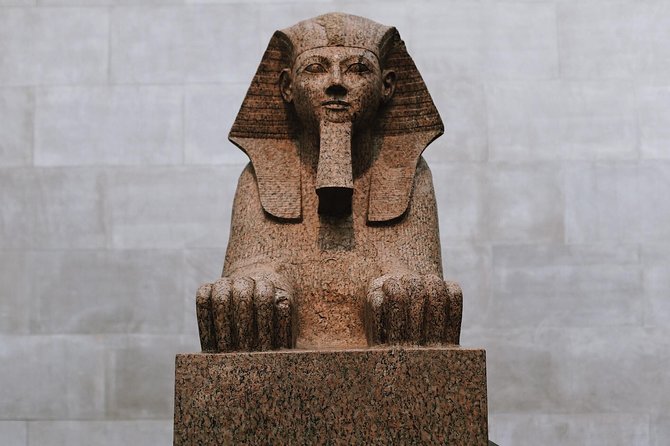
- Starting in the Great Hall and ancient collections
- Medieval Europe, the Studiolo, and Henry VIII’s armor
- American art and the Chicago Stock Exchange staircase
- Vermeer, Picasso, Seurat, and Van Gogh
- The guide makes the difference
- Is $132.50 a fair price?
- Timing, entry, and what to carry
- Who should book this Met experience?
- Should you book it?
- FAQ
- Where does the tour start and end?
- How long does the tour last?
- How many people can join?
- Is museum admission included?
- Does reserved entry remove the need to wait?
- What art and objects might I see?
- Is the tour accessible to wheelchair users?
- Are hotel transfers included?
- What is the cancellation policy?
Key points to know before booking
- A short route through a huge museum: The tour focuses on major permanent-collection highlights rather than trying to cover all of The Met.
- Small group, more conversation: No more than eight people join a booking, so the guide can respond to your interests.
- Reserved entry helps with time: You still must pass through museum security, and a line can form during busy periods.
- Guides shape the experience: Mark, Cherie, Robin, Jonathan, Jeff, Rob, Raimundo, Matt, and Kevin have all led highly praised tours.
- The route mixes art and museum story: You learn about the works, artists, donors, architecture, and The Met’s place in New York.
- Plan to stay longer: The tour offers a useful first look, but you will need extra time for rooms not included in the route.
Why a small-group tour helps at The Met
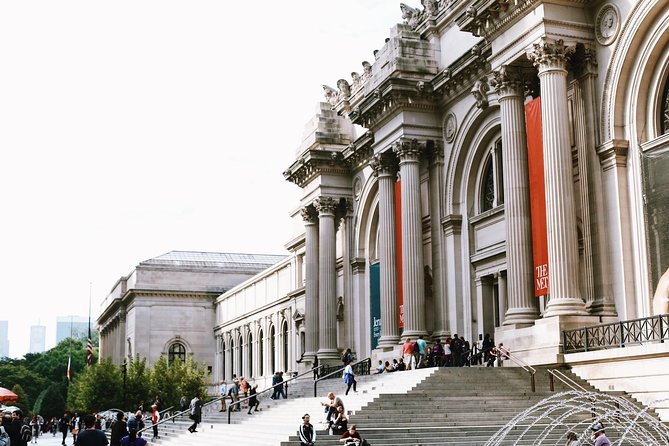
The Metropolitan Museum of Art holds about two million works and artifacts. That number matters when you arrive. You can walk through the Great Hall, pick a direction, and still spend the rest of the day seeing only a fraction of the building.
A guide solves the first problem: deciding what deserves your limited time. This is not a museum tour that tries to explain every room. Instead, it gives you a clear run through major works and important galleries, with enough background to make the art easier to read.
The group cap of eight is a real advantage. You are not following a large crowd while trying to hear every sentence. A small group also gives the guide a chance to notice what catches your eye. Mark, Cherie, Robin, Jonathan, Jeff, Rob, Raimundo, Matt, and Kevin are among the guides associated with especially strong experiences, and several are praised for warmth, humor, flexibility, and passion for The Met.
That does not mean every guide will use the same route or tell the same stories. Your guide may spend more time with paintings, sculpture, architecture, family-friendly explanations, or the museum itself. That variation is useful, though it also means the experience can depend heavily on who leads your group.
More Met and art museum visits:
- NYC: Museum of Modern Art (MoMA) Entry Ticket
★ 4.6 · 12,540 reviews - NYC: Guggenheim Museum Entry Ticket
★ 4.4 · 2,201 reviews - Metropolitan Museum Guided Group Tour
★ 5.0 · 1,013 reviews
Starting in the Great Hall and ancient collections
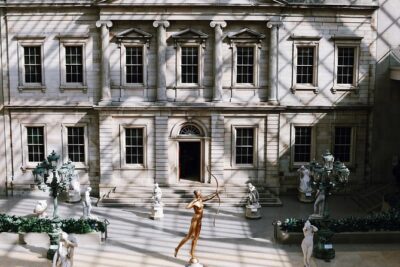
The tour begins at The Met, 1000 Fifth Avenue, along Central Park. The Great Hall is an impressive orientation point, but it is also a warning about the museum’s scale. You are entering a place built for repeated visits, not a quick checklist.
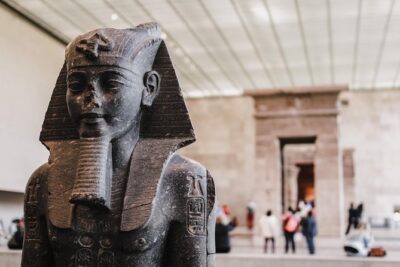
From there, the route generally moves through major galleries and highlights. Ancient Egypt is often an important part of the visit, and one guide is praised for explaining this section with a broad grasp of art history. The Egyptian rooms give the tour a strong early foundation because they show how objects can carry religious, political, and daily-life meaning at the same time.
You should expect interpretation rather than a simple parade of famous names. A good guide helps you notice posture, symbols, materials, patronage, and the choices made by the artist or maker. That approach is especially helpful if you do not usually spend much time in museums.
The tour may also touch on The Met’s architecture and its story as a New York institution. One useful part of the experience is learning how this American museum differs from older European museums. The Met was founded before the United States had reached 100 years of age, so its collections reflect a young country building a cultural institution by gathering art from many eras and places.
Medieval Europe, the Studiolo, and Henry VIII’s armor
The route passes through medieval European galleries on the way to the Studiolo from the Ducal Palace. This small room can be more memorable than a grand gallery because it shows how art and architecture once worked together in a private setting.
You also see arms and armor from the Middle Ages, including pieces associated with Henry VIII. Armor is useful for families and visitors who find painted art hard to approach. It is direct, physical, and easy to discuss: protection, status, craftsmanship, ceremony, and warfare are all visible in the objects themselves.
The guide can connect the objects to their setting and use. That context turns a display of metal suits into a look at power and public image. Still, the time is limited. If armor or medieval art is your main reason for visiting The Met, tell your guide early so the group’s interests can shape the emphasis.
Some rooms require quiet or limit speaking. Your guide will explain those rules before you enter. That is a small but important practical point, since a museum tour has to balance conversation with respect for the space and other people.
American art and the Chicago Stock Exchange staircase
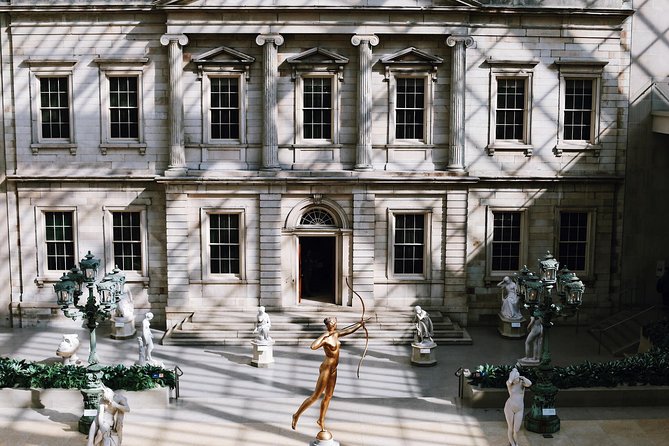
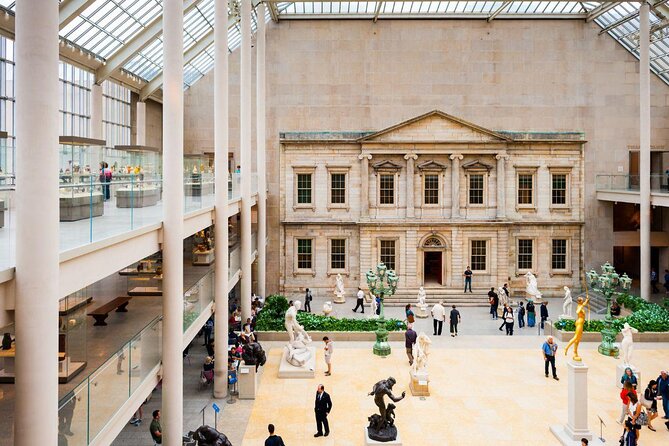
The American wing brings a different tone. The Chicago Stock Exchange staircase is one of the route’s striking architectural pieces, and it helps show that The Met is not only a collection of framed paintings. Buildings, interiors, furniture, and decorative arts are part of the story too.
Washington Crossing the Delaware is another major stop. The painting offers an opening for discussion about national symbols, historical memory, composition, and the way an artwork can become part of popular culture. A guide can point out details that are easy to pass while you are simply looking for the famous boat and flag.
The American section may also include the Hudson River School and Tiffany’s Autumn scene. These works help explain how American artists presented place, nature, industry, and national identity. I find this part particularly useful if you are familiar with American history but less familiar with American art.
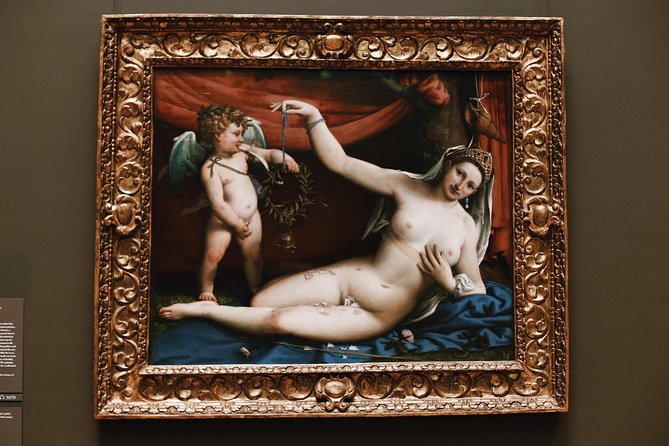
You may also see Madame X, the well-known portrait by John Singer Sargent. Its story adds a human and social angle to the route. As with all major works, displays can change because pieces may be on loan, under restoration, or moved during gallery updates. The tour’s highlights are therefore a general guide, not a promise that every named object will be on the wall.
More New York City museums to visit:
- NYC: 9/11 Memorial & Museum Timed-Entry Ticket
★ 4.8 · 31,428 reviews - NYC: Empire State Building Tickets – Observatory & Museum
★ 4.7 · 25,757 reviews - New York City: American Museum of Natural History Ticket
★ 4.5 · 15,447 reviews - 9/11 Memorial, Ground Zero Tour with Optional 9/11 Museum Ticket
★ 5.0 · 6,381 reviews
Vermeer, Picasso, Seurat, and Van Gogh
The European painting section supplies the famous names many people hope to see: Vermeer, Picasso, Seurat, and Van Gogh. These artists span very different periods and styles, so the guide’s job is to provide enough connection without turning the visit into a rushed art-history lecture.
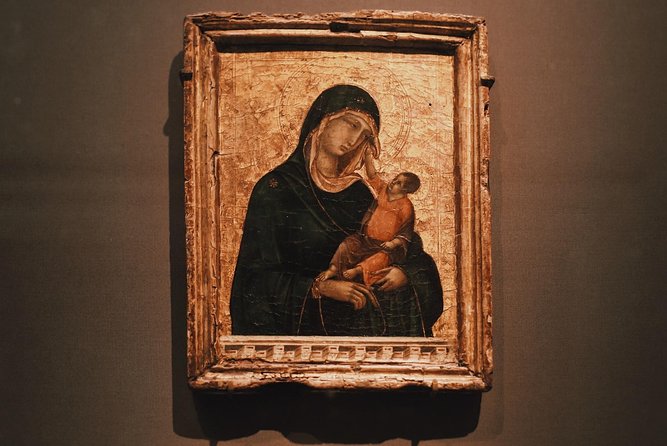
Vermeer rewards close looking. His paintings can seem quiet at first, but a guide can help you notice light, domestic details, arrangement, and the careful way the scene controls your attention. The same is true of Madonna with Child, where a few visual choices can open a larger discussion about devotion, family, and the traditions of religious art.
Picasso and Seurat offer a useful contrast. You can consider how artists changed the handling of form, color, and perception across time. Van Gogh brings another kind of story, with the artist’s life and troubled career often shaping how people approach his work. A good guide keeps the biography in proportion, using it to add context rather than letting dramatic personal details replace the art.
The strongest guides appear to use questions and observation rather than only reciting facts. Rob, for example, is praised for encouraging people to find clues in a work and draw their own conclusions about what the artist meant. That method gives you something to carry into the rest of the museum after the tour ends.
The guide makes the difference
This tour is sold as a semi-private experience, but the human element is still central. Guides such as Mark are praised for storytelling, humor, and the ability to adjust when a group shows interest in a particular subject. Cherie is described as engaging with both adults and younger visitors, while Robin is noted for keeping a teenager involved.
Jonathan is praised for combining information about the art with the history of The Met itself. Jeff is described as quickly sensing the group’s interests and shifting the focus accordingly. Raimundo is associated with an efficient route through the major stops, while Matt is praised for making the start of the tour easy and for covering the highlights clearly.
These details matter because a museum tour can fail in two ways. It can be too basic, with facts aimed at young school groups, or too dense, with so much information that you stop looking at the art. One dissatisfied account describes a tour as overpriced, disorganized, and too elementary, with several major works missed. That is the clearest warning here: do not assume a small group automatically guarantees a sophisticated or perfectly organized experience.
If you have specific priorities, name them at the start. Tell the guide if you care most about Egyptian art, American painting, armor, architecture, modern art, or family-friendly discussion. The smaller format gives you a better chance of being heard than a large public tour.
Is $132.50 a fair price?
The cost is $132.50 per person. Admission is included, and the reserved entry can save time, though security remains mandatory. You are mainly paying for a focused route and two and a half hours of live explanation.
I think the price makes the most sense in three situations. First, you have limited time in New York and want to see major works without spending an hour planning the museum yourself. Second, this is your first visit and the scale of The Met feels intimidating. Third, you are bringing children or a mixed-age group and want someone to keep the visit moving.
The value is less clear if you already know The Met well or prefer to wander at your own pace. You may also find the price high if your main goal is simply to enter and spend hours in one favorite department.
Your admission pass lasts all day, so the tour can work as an introduction rather than your entire visit. After the guided portion, you can return to galleries that interest you and spend more time with areas the route did not cover. Plan on at least another hour or two if you want to make the most of that benefit.
Timing, entry, and what to carry

The experience lasts about two and a half hours and begins and ends at The Met. It is near public transportation, and a taxi or Uber is recommended instead of expecting hotel pickup, since transportation to and from your hotel is not included.
Reserved entry does not mean walking straight through every doorway. Security is still required, and additional lines can form when the museum is busy or security rules tighten. Arrive ready for that process, and avoid bringing large bags or suitcases. Only handbags and small, thin backpacks are allowed through security.
Wear suitable clothing for museum entry and expect a fair amount of walking. The activity requires moderate physical fitness and is not available to people with walking disabilities or those using a wheelchair. That limitation is important to consider before booking, especially for a family group with different mobility needs.
The tour is offered in English. A minimum of two people is required for it to run. If that minimum is not met, you are offered an alternative or a full refund.
Free cancellation is available up to 24 hours before the start time. Cancellations or changes made inside that 24-hour window are not refunded or accepted, so keep your New York schedule firm once you reach that point.
Who should book this Met experience?
I would choose this tour for a first visit, a short New York stay, or a family group that needs structure. It is also a good fit for solo visitors who want context and conversation without joining a large group.
Art lovers should book with a clear plan. This is a highlights tour, not a specialist study session. If you want a long look at one collection, the time spent moving between departments may feel too quick.
Families can benefit from the mix of armor, architecture, famous portraits, and dramatic artist stories. Older children and teenagers may respond well when the guide asks them to spot visual clues instead of simply listening to dates. Adults who prefer quiet, self-directed museum time should consider buying admission on their own instead.
Should you book it?
Book this Met tour if you want a smart first pass through a giant museum, value a small group, and are willing to pay for a guide’s route and explanations. The strongest experiences center on guides such as Mark, Cherie, Robin, Jonathan, Jeff, and Rob, whose humor, flexibility, and clear storytelling help turn famous objects into memorable encounters.
Skip it if $132.50 feels too steep, you dislike guided pacing, or you already know which galleries you want to visit. For most first-time visitors with only a few hours, the price buys useful direction. Just remember that the tour is an introduction to The Met, not the final word on it.
FAQ
Where does the tour start and end?
It starts at The Metropolitan Museum of Art, 1000 Fifth Avenue, New York, NY 10028. The activity ends back at the same meeting point.
How long does the tour last?
The tour lasts approximately two hours and 30 minutes.
How many people can join?
The group is limited to a maximum of eight people. A minimum of two guests is required for the tour to operate.
Is museum admission included?
Yes. All entrance fees are included in the tour price.
Does reserved entry remove the need to wait?
No. Reserved entry helps you avoid the regular entrance line, but all visitors must still pass through security. Lines may form because of security procedures or increased crowd controls.
What art and objects might I see?
The route generally includes highlights such as Henry VIII armor, the Tiffany Autumn scene, the Chicago Stock Exchange staircase, Madame X, Washington Crossing the Delaware, works by Vermeer, Picasso, Seurat, and Van Gogh, Madonna with Child, the Studiolo from the Ducal Palace, and selected Egyptian and medieval art. Individual works may be on loan, under restoration, or moved.
Is the tour accessible to wheelchair users?
No. The tour is not available for people using a wheelchair or those with walking disabilities. A moderate level of physical fitness is required.
Are hotel transfers included?
No. Hotel pickup and drop-off are not included. A taxi or Uber is recommended for getting to and from the museum.
What is the cancellation policy?
You can cancel up to 24 hours before the start time for a full refund. Cancellations or changes made less than 24 hours before the start time are not accepted and are not refunded.
Just listed around New York City
- NYC: Little Shop of Horrors Off-Broadway Ticket5 reviews
- Private NYC Airport Transfer: LGA to Manhattan – Up to 5★ 3.6 · 5 reviews
- New York City Tour in German★ 4.5 · 5 reviews
- New York: Hamilton and Washington Revolutionary Walking Tour★ 5.0 · 5 reviews
- NYC Freedom Tower Private Photo or Video Experience★ 4.0 · 6 reviews
- New York Afternoon Fall Foliage Cruise with Lunch★ 5.0 · 6 reviews
- Brooklyn Walking Tours by Locals: Private & 100% Personalized★ 4.0 · 6 reviews
- Southold Bay Oyster Farm Tour★ 5.0 · 6 reviews
Metropolitan Museum & Art Tours, compared.


“The Met” Metropolitan Museum of Art Exclusive Guided Tour
Read our review →


Browse the lists this tour appears in