
Reviewed · MUSEUMS
Whitney Museum of American Art Admission Ticket
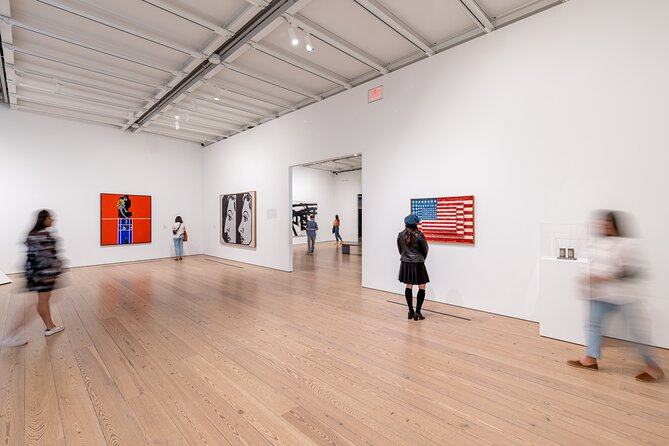
The best part of this ticket is that it brings you into one of New York’s most distinctive museums, a light-filled Renzo Piano building between the High Line and Hudson River. Inside, you’ll find American art from the 20th and 21st centuries, including works by Edward Hopper, Georgia O’Keeffe, Alexander Calder, and living artists.
I like the freedom to explore at my own speed, and I like that free daily tours give you a way to add context without paying for a private guide. The terraces are another major plus, with outdoor artworks and broad views across Manhattan.
The main caution is crowding. Special exhibitions can become packed, and a late time slot may leave you rushing through the galleries before closing. Also, this ticket uses a voucher exchange at the admissions desk, so check your booking details carefully rather than assuming it is a direct museum ticket.
In This Review
- Key points to know before you go
- Why the Whitney deserves a place in your New York plans
- Arriving in the Meatpacking District
- What two hours inside the Whitney really means
- The galleries: Hopper, O’Keeffe, Pollock, and living artists
- Free tours and finding your own route
- The terraces are part of the admission
- Temporary exhibitions and the crowd problem
- Is the $30 ticket a good value?
- Who will enjoy this museum most
- My practical plan for a better visit
- Should you book the Whitney admission ticket?
- FAQ
- How much does admission cost?
- How long does the visit take?
- What does the ticket include?
- Can I explore the museum on my own?
- Are free guided tours available?
- Where is the Whitney Museum located?
- Can I cancel for a full refund?
Key points to know before you go
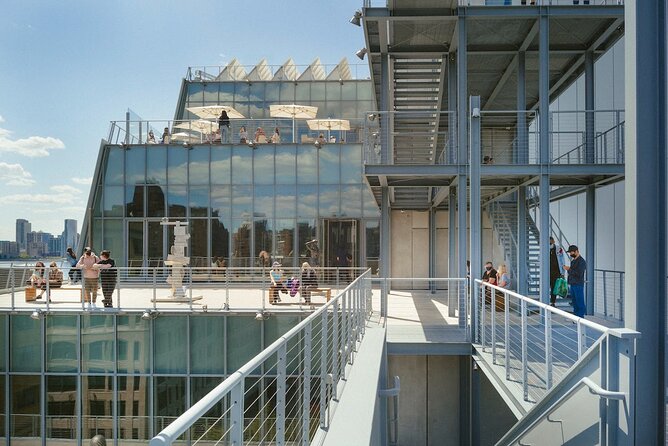
- Renzo Piano’s building: Bright galleries, unusual angles, outdoor terraces, and views toward Manhattan and the Hudson River.
- American art focus: See works by Edward Hopper, Georgia O’Keeffe, Jackson Pollock, Alexander Calder, and many living artists.
- Free daily tours: Ask about tour times when you arrive, then join one if you want help finding your way through the collection.
- Two hours is a useful estimate: That works for a focused visit, but major temporary shows can require more time.
- The High Line is next door: Pair the museum with a walk above the old rail line, Chelsea Market, or Greenwich Village.
- Crowds affect value: Popular exhibitions may be hard to see, especially late in the day or near the end of a show.
Why the Whitney deserves a place in your New York plans
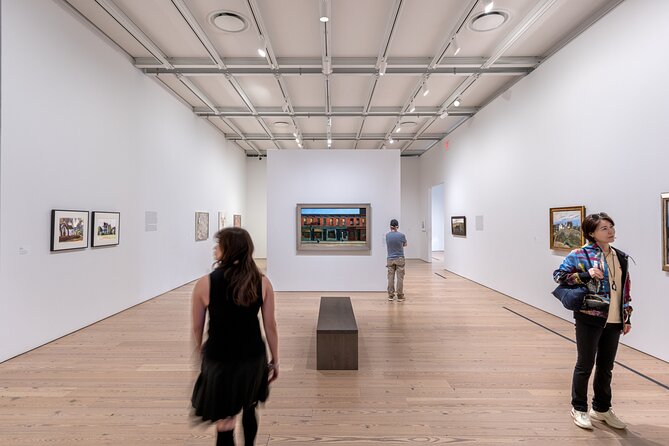
The Whitney is devoted to American art, with a particular interest in artists who are still working. That gives the museum a different feel from institutions organized mainly around European masters or ancient collections.
You’ll move between familiar names and less predictable work. Edward Hopper gives you recognizable American scenes and quiet tension. Georgia O’Keeffe brings a different sense of scale and form. Alexander Calder adds movement and playful engineering, while Jackson Pollock represents the force of postwar abstraction.
The museum also gives considerable space to current art. That can be exciting, but it requires a little patience. Some rooms may offer an immediate visual hit. Others may seem puzzling at first, especially if you prefer clearly representational painting. I recommend reading the wall text for a few minutes before moving on. A work that looks simple from the doorway may make more sense once you know the artist’s question or method.
The Whitney’s signature Biennial is a major reason to visit during its run. It surveys recent developments in American art, so the experience changes from one edition to the next. The 2024 Biennial was included with this admission, but always check which temporary exhibitions are running for your chosen date.
More New York City museums to visit:
- NYC: 9/11 Memorial & Museum Timed-Entry Ticket
★ 4.8 · 31,428 reviews - NYC: Empire State Building Tickets – Observatory & Museum
★ 4.7 · 25,757 reviews - New York City: American Museum of Natural History Ticket
★ 4.5 · 15,447 reviews
Arriving in the Meatpacking District
The museum sits in Manhattan’s Meatpacking District, beside the High Line and within walking distance of Chelsea Market and Greenwich Village. The location is valuable because you can turn a two-hour museum visit into a larger afternoon without crossing the city.
The neighborhood has galleries, restaurants, nightlife, and the elevated High Line. You can visit the Whitney first, then walk north or south along the park. Chelsea Market is a practical place to find food afterward, since food and drinks are not part of the museum ticket.
The museum is near public transportation, which makes it easy to add to a day in lower Manhattan or Chelsea. Driving is less appealing. One person specifically found parking difficult, and the information supplied with the ticket does not promise a garage or parking arrangement. I would use public transportation rather than build your schedule around finding a place for a car.
At the admissions desk, you exchange your mobile voucher for entry. That process has generally been described as quick, but the voucher detail matters. A booking made through an outside seller may not look like a ticket issued directly by the Whitney, and one visitor had trouble because museum staff said the reservation had been misdirected. Save the confirmation on your phone and allow a few minutes for check-in.
What two hours inside the Whitney really means

The advertised visit lasts about two hours, but that is a planning estimate rather than a strict tour length. In two hours, you can see a strong selection of the permanent collection, visit a temporary exhibition, and spend time on the terraces.
If you are mainly coming for Hopper, two hours may be enough, but do not expect a large single-artist museum. The Whitney has Hopper works, yet its purpose is broader. You may find only a small number on display at a given time.
If you are attending for a major temporary show, allow more time when possible. Popular exhibitions can slow you down because the rooms become crowded. Several people found that packed galleries made it difficult to see paintings or read the signs. A late entry, such as 5 p.m. before a 6 p.m. closing time, can be poor value if you want to see more than one show.
For a first visit, I would aim for an earlier arrival and use this order:
- Start with the temporary exhibition if it is the main reason for your visit.
- Move through the permanent collection while your attention is fresh.
- Save the upper terrace for the end, when you can pause and look across the city.
- Ask about the free tour schedule before you leave the admissions area.
The museum has seating in the galleries, which helps if you are visiting with a child, an older family member, or anyone who needs regular breaks. One family found that a few hours and the many places to sit worked well for a grandparent and a young art student.
The galleries: Hopper, O’Keeffe, Pollock, and living artists
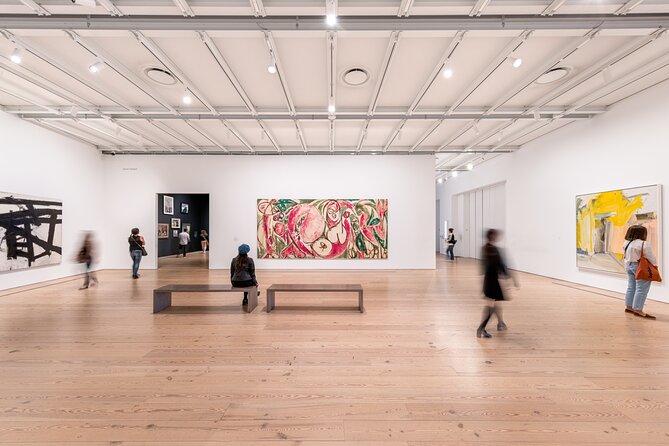
The Whitney’s collection is strongest when you let it show you how American art changed over time. You might begin with a work that feels familiar, then encounter a room where color, material, sound, or scale becomes the main subject.
Hopper is a useful anchor. His paintings are accessible without being simple, and they reward slow looking. Pay attention to the spaces between people, the direction of the light, and the feeling that something has just happened or is about to happen. If Hopper is your only interest, however, manage your expectations. The museum is not a dedicated Hopper gallery.
O’Keeffe offers another point of entry, especially if you enjoy strong shapes, close views, and bold color. Calder’s work can change the pace of your visit. His sculptures are not just objects to inspect from one side, and the museum’s open design can make their forms especially effective.
Pollock and other abstract artists may be more demanding if you prefer images that tell a clear story. I would not treat that as a reason to skip the museum. Instead, use the free tour or wall labels to gain a foothold. The Whitney is a good place to see how different artists respond to American life, politics, cities, bodies, nature, and materials.
The living artists are important here. Their work may be strange, funny, political, beautiful, or frustrating. That range is part of the point. You are not being asked to approve of every piece. You are being given a view of what artists in the United States are doing now.
A few more New York City picks to weigh up
- NYC: SUMMIT One Vanderbilt Tickets
★ 4.7 · 51,195 reviews - NYC: Museum of Modern Art (MoMA) Entry Ticket
★ 4.6 · 12,540 reviews - NYC: One World Observatory Skip-the-Line Ticket
★ 4.7 · 12,329 reviews - NYC Empire State Building Observation Deck Ticket
★ 4.5 · 6,916 reviews
Free tours and finding your own route

Free daily tours are included with admission. Times vary, so ask at the admissions desk rather than assuming one will begin soon after you arrive.
A tour can help you make sense of a museum that covers many styles and periods. It is especially useful if you have limited time or feel unsure about contemporary art. You can also explore independently, then join a tour later if you want more background.
The staff has earned strong praise for being friendly and helpful. That matters in a museum with several floors and changing exhibitions. If you need directions, want to know which rooms are open, or are looking for the tour schedule, ask early.
Do not expect every tour to cover the entire building. A free daily tour is best treated as an introduction, not a private itinerary tailored to your interests. If you have come for Hopper, the Biennial, or a particular temporary show, tell the guide what you hope to see.
The terraces are part of the admission
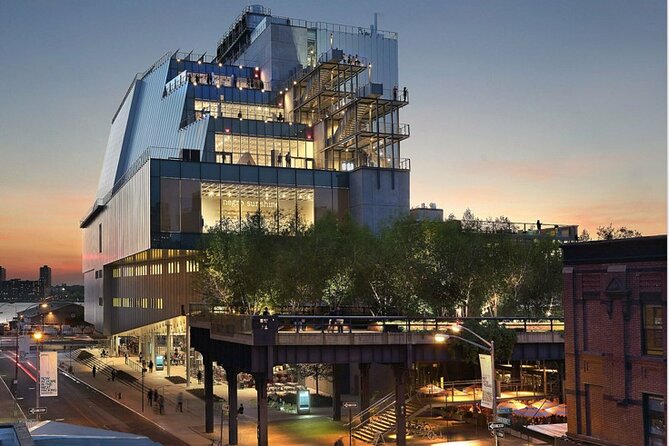
Many art museums give you an indoor collection and little reason to look outside. The Whitney is different. Outdoor art appears on the terraces of floors 5, 6, and 7, while the floor 8 terrace provides wide views of Manhattan and the Hudson River.
I would make time for every terrace that is open. These spaces help you understand the building and the neighborhood at once. You can look down toward the High Line, across to the waterfront, and back at the museum’s unusual structure.
The upper views are especially useful after a dense gallery visit. You can sit, reset your eyes, and place the museum within lower Manhattan. The terraces also make the ticket feel like more than a standard indoor exhibition admission.
Weather and access to outdoor areas can affect the experience, so treat the terraces as an important feature rather than a guarantee of a long outdoor stay. Still, the views are one of the clearest reasons to choose the Whitney over another museum on a crowded New York afternoon.
Temporary exhibitions and the crowd problem
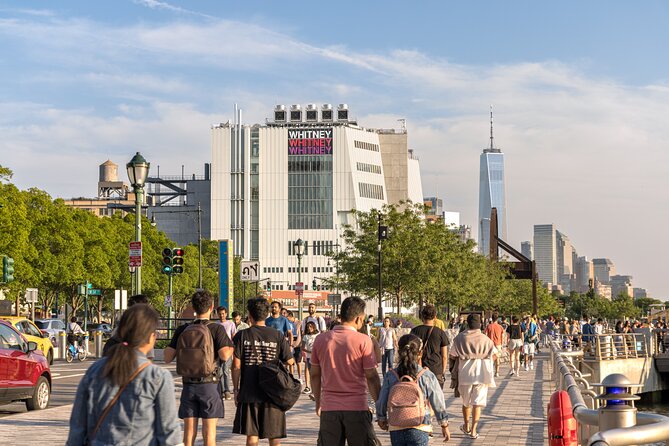
Temporary shows can be the highlight of your visit. Past exhibitions have included major presentations of artists such as Amy Sherald and Edward Hopper, as well as shows dealing with subjects such as Hurricane Maria in Puerto Rico. These exhibitions can add social and political context that you will not get from a quick look at the permanent collection.
The downside is demand. When a popular show is nearing its closing date, rooms may become packed. Time-slot tickets do not always mean an uncrowded viewing. If the art is ten people deep, even a well-planned visit can feel frustrating.
I would book an earlier time and avoid the final days of a popular exhibition when possible. If your schedule only allows a late visit, choose one priority and accept that you may not see everything. A short visit can still work, but the $30 price becomes harder to justify if half the museum is closed or you have less than an hour inside.
Exhibitions change, and the museum may close some floors during installation. Check what is open for your date before booking. This is the most important practical step for protecting the value of your admission.
Is the $30 ticket a good value?
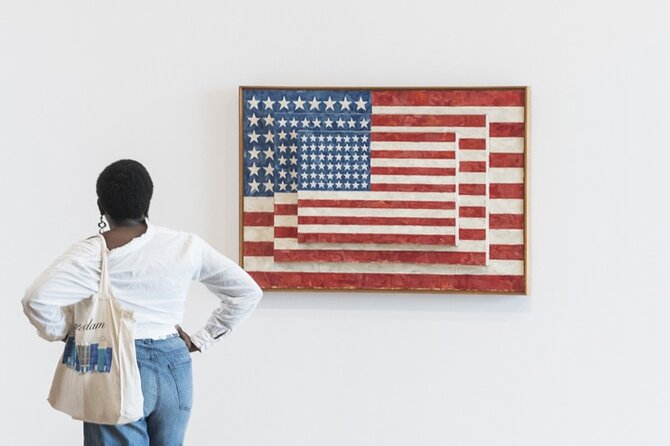
At $30 per person, this is not a bargain museum stop, but it can be a fair price for a full visit. You are paying for admission to a major American art collection, temporary exhibitions when included, free daily tours, the Renzo Piano building, outdoor artworks, and city views.
The value depends on how much is open and how long you stay. If you spend two hours moving through several floors and take time on the terraces, the price compares reasonably with other major New York attractions. If only part of the museum is open, or you arrive shortly before closing, the calculation changes.
Pre-booking is useful when you have a fixed New York schedule. It gives you planned entry and avoids arriving without a ticket during a busy period. The tradeoff is that you must pay attention to the voucher process and the cancellation deadline.
Free cancellation is available if you cancel at least 24 hours before the start time. Changes or cancellations inside that window are not accepted for a refund. That policy is forgiving enough for normal planning, but it will not protect you from a last-minute change.
Who will enjoy this museum most
I would recommend the Whitney to you if you like American art, modern art, current exhibitions, or architecture. It also suits anyone planning to walk the High Line, since the museum fits naturally into that route.
Families can do well here because the visit can be kept to a few hours, and there are places to sit. Young artists and art students may get more from the museum than someone who wants only famous paintings. The collection offers many ways to think about materials, composition, politics, and everyday American life.
You may want to choose another museum if you dislike modern and contemporary art almost entirely. A person visiting only for Hopper could leave disappointed if few of his works are displayed. You should also reconsider a late booking during a popular temporary exhibition, especially if the museum closes soon afterward.
Solo visitors can take the museum at their own speed. Couples and friends can split up and meet on a terrace. Families may prefer to choose one or two floors rather than trying to see everything.
My practical plan for a better visit
I would book for earlier in the day, especially if a major exhibition is your priority. Give yourself the freedom to stay longer than two hours, but do not feel obliged to inspect every room.
At arrival, exchange the mobile voucher promptly and ask about free tour times. Then check which galleries and terraces are open. This quick conversation can prevent wasted time and clarify whether the show you came to see is available.
Wear comfortable shoes because you will likely combine the museum with the High Line or Chelsea. Plan food separately, since the ticket does not include meals or drinks. Chelsea Market is close by, and Greenwich Village is within walking distance.
Use the museum’s seating. A short pause can make the final floors more enjoyable, especially after a crowded special exhibition. Read selected wall text rather than every label, unless you are visiting for serious study.
Before leaving, return to the floor 8 terrace. The city and Hudson River views are not an extra attraction tacked onto the building. They are part of what makes the Whitney feel connected to New York.
Should you book the Whitney admission ticket?
Book it if you want a focused look at American art and can give yourself about two hours, preferably at an earlier time. The strongest reasons are the quality and range of the collection, the free tours, the outdoor terraces, and the museum’s excellent location beside the High Line.
I would book with care if you are visiting mainly for one temporary exhibition. Check the exhibition dates, closing time, and open floors before paying. For Hopper fans, the museum is worthwhile, but it should not be treated as a large Hopper-only collection.
At $30, the ticket works best as part of a half-day in the Meatpacking District. Pair it with the High Line and Chelsea Market, use the terraces, and leave enough time to look slowly rather than racing through the galleries.
FAQ
How much does admission cost?
The ticket costs $30 per person.
How long does the visit take?
The visit lasts approximately two hours, though you may spend more or less time depending on the exhibitions and your pace.
What does the ticket include?
Admission to the Whitney Museum is included, along with access to free daily tours.
Can I explore the museum on my own?
Yes. You can explore the permanent and temporary exhibitions at your own pace and schedule.
Are free guided tours available?
Yes. Free daily tours are offered at different times. Ask about the schedule when you arrive.
Where is the Whitney Museum located?
It is in Manhattan’s Meatpacking District, between the High Line and the Hudson River. Chelsea Market and Greenwich Village are also nearby.
Can I cancel for a full refund?
Yes, if you cancel at least 24 hours before the experience start time. Cancellations or changes made less than 24 hours in advance are not refunded.
Just listed around New York City
- NYC: Little Shop of Horrors Off-Broadway Ticket5 reviews
- Private NYC Airport Transfer: LGA to Manhattan – Up to 5★ 3.6 · 5 reviews
- New York City Tour in German★ 4.5 · 5 reviews
- New York: Hamilton and Washington Revolutionary Walking Tour★ 5.0 · 5 reviews
- NYC Freedom Tower Private Photo or Video Experience★ 4.0 · 6 reviews
- New York Afternoon Fall Foliage Cruise with Lunch★ 5.0 · 6 reviews
- Brooklyn Walking Tours by Locals: Private & 100% Personalized★ 4.0 · 6 reviews
- Southold Bay Oyster Farm Tour★ 5.0 · 6 reviews
Museums, compared.

Empire State Building Tickets – Observatory & Museum
Read our review →


9/11 Memorial, Ground Zero Tour with Optional 9/11 Museum Ticket
Read our review →

All-Access 9/11: Ground Zero Tour, Memorial and Museum, One World Observatory
Read our review →
Browse the lists this tour appears in