
Reviewed · NYC ARCHITECTURE TOURS
New York Upper West Side Art and Architecture Tour
Upper Manhattan’s architecture can look like a wall of stone, glass, and steel until someone points out how the pieces fit together. This two-hour walk follows that idea from Columbus Circle to Hearst Tower, with stops at Lincoln Center, Central Park, and major modern buildings along the way.
I like the small maximum of 15 people, which should make it easier to ask questions, and I like the individual headsets, a smart touch on noisy city streets. Guide Ivan gets especially strong praise for explaining both buildings and city planning, not just naming architects.
The main tradeoff is pace. You cover many sites in two hours, and the tour includes walking and travel time rather than long indoor visits. It suits curious walkers who want context, not anyone expecting a full museum tour or a slow architectural study.
In This Review
- Key points to know before you book
- Why this walk makes the Upper West Side easier to read
- Columbus Circle sets the scene
- The Time Warner Center and Museum of Arts and Design
- Central Park as part of the architecture lesson
- Lincoln Center, where the tour hits its stride
- Juilliard and the changing face of Lincoln Center
- Alice Tully Hall and the smaller details
- Passing Fordham University and heading south toward Hearst Tower
- Hearst Tower provides a sharp finale
- What the guide adds to the experience
- Is $49 a fair price?
- Who should book this walk?
- Final call: book it for context, not admission
- FAQ
- Where does the Upper West Side Art and Architecture Tour start?
- Where does the tour end?
- What time does the tour begin?
- How long does the tour last?
- How much does the tour cost?
- How large is the tour group?
- Which languages are available?
- Are headsets included?
- Does the tour include admission to the buildings?
- What happens if the weather is poor?
Key points to know before you book
- Starts at Columbus Circle at noon: Meet by the Christopher Columbus statue and begin near the Time Warner Center and Central Park Tower.
- Ends near Midtown transit: The walk finishes at Hearst Tower, 300 West 57th Street, close to subway and other transportation.
- A compact look at major design: Lincoln Center, David Geffen Hall, the Metropolitan Opera, Juilliard, Alice Tully Hall, and more appear along the route.
- Personal headsets are included: You can hear the guide despite traffic and city noise.
- Small-group format: The maximum is 15 people, with commentary available in English, Spanish, French, or Italian.
- Best for architecture and city-planning fans: Ivan is praised for answering detailed questions while keeping the walk accessible to people without a design background.
Why this walk makes the Upper West Side easier to read
The Upper West Side rewards a guide because its buildings are not all from one period or one school of design. You move between grand civic spaces, cultural buildings, commercial towers, and open parkland. Without context, the route can feel like a string of famous addresses. With a good explanation, it becomes a lesson in how New York uses architecture to signal power, culture, wealth, and public purpose.
This is also a useful choice if you have limited time. The tour begins at noon and lasts about two hours, so it can fit between a morning activity and an evening plan. You do not need to commit a full day to architecture, yet you still get a focused walk through one of Manhattan’s most important cultural corridors.
The small group matters here. Architecture questions can become quite specific, and the guide can respond to the interests of the people present. Ivan, the guide named in the tour details, is praised for explaining city planning as well as individual buildings. That broader view gives the walk more substance than a simple list of architects and completion dates.
More architecture walks:
- Manhattan Architecture Yacht Cruise
★ 5.0 · 1,395 reviews - NYC: Around Manhattan Official NYC Architecture Cruise
★ 4.8 · 402 reviews - Art Deco and Architecture Midtown Landmarks Tour
★ 5.0 · 142 reviews
Columbus Circle sets the scene
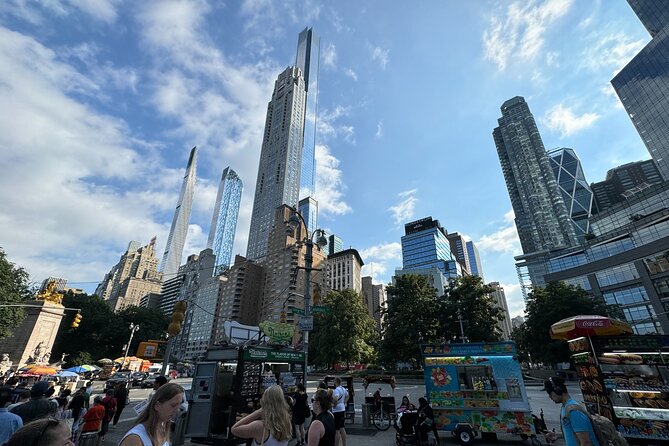
The meeting point is Columbus Circle, at the southwest corner of Central Park. You begin near the Christopher Columbus statue, with the Times Warner building and Central Park Tower providing an immediate contrast in scale and style.
This is a useful opening because the area puts old and new New York close together. The circle serves as a gateway between Central Park, the Upper West Side, Midtown, and the luxury development around the park. The guide can discuss the buildings as part of the city’s changing skyline rather than treating each one as an isolated object.
The first stop lasts about 15 minutes. That is enough time for an overview and some questions, though not enough for a close study of every facade. Bring your attention upward. The strongest details in this part of Manhattan often sit above street level.
The Time Warner Center and Museum of Arts and Design
The tour then spends about 10 minutes looking at the Time Warner Center. Its paired towers and broad public presence make it one of the most recognizable buildings at Columbus Circle. This is a good place to consider how a modern complex handles a major urban crossroads beside Central Park.
The Museum of Arts and Design is also discussed along the route. The information provided does not give a separate stop length, so you should treat it as a passing architectural and cultural point rather than an included museum visit. Admission fees are included in the tour price, but the stops listed here are outside viewing and discussion points, not promises of extended interior access.
That distinction is important. If you want to go inside a museum or spend time studying exhibitions, you will need a separate plan. This walk is about seeing the city in place.
Central Park as part of the architecture lesson
Central Park receives about 10 minutes of attention. The park is not simply a green break between buildings. It helps explain why the surrounding towers, apartments, and cultural institutions have the impact they do.
From the edge of the park, you can better judge the relationship between open space and vertical construction. The contrast is one of the defining visual experiences of Manhattan. A guide can also help you think about the park as part of the city plan rather than a separate attraction.
Do not expect a long park walk. Central Park is one stop in a tightly timed route, and the tour continues toward Lincoln Center. If you want a leisurely stroll through the park, plan that for another part of your day.
Another side of New York City for the same day:
- NYC: SUMMIT One Vanderbilt Tickets
★ 4.7 · 51,195 reviews - NYC: 9/11 Memorial & Museum Timed-Entry Ticket
★ 4.8 · 31,428 reviews - NYC: Empire State Building Tickets – Observatory & Museum
★ 4.7 · 25,757 reviews - New York City: Statue of Liberty & Ellis Island with Ferry
★ 4.6 · 18,683 reviews
Lincoln Center, where the tour hits its stride
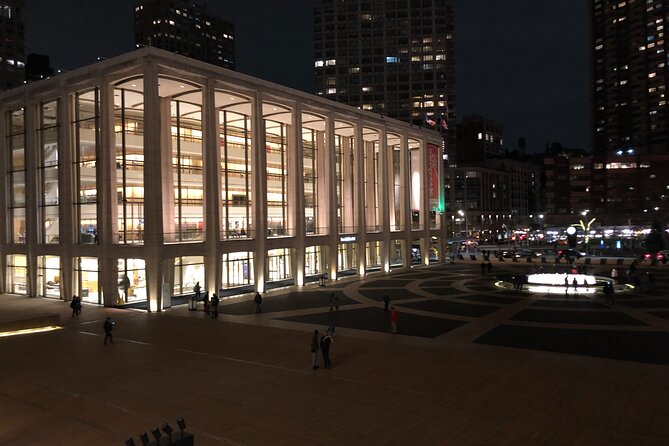
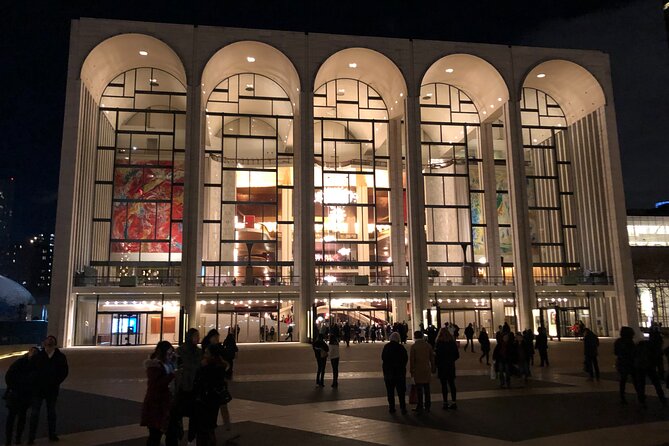
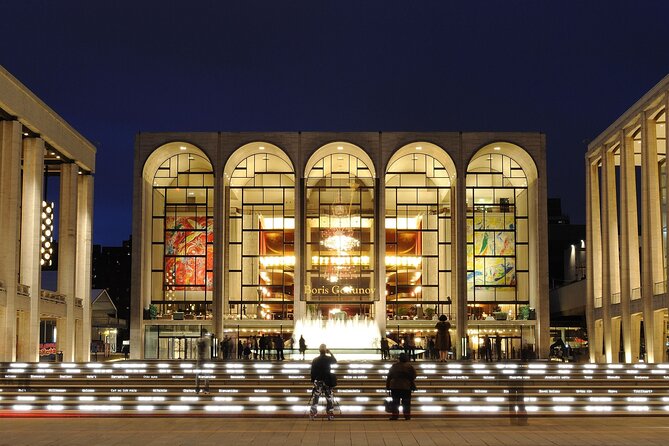
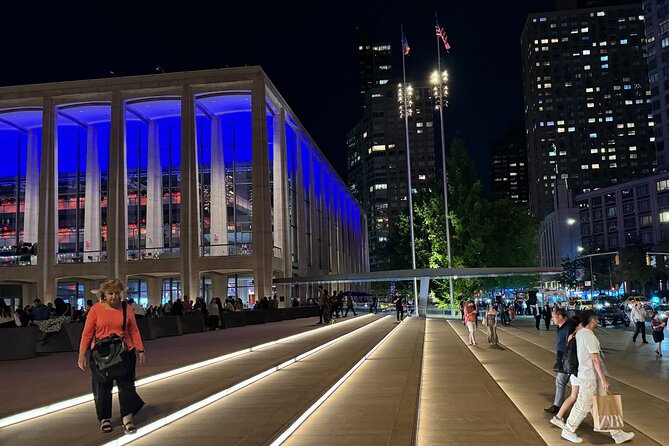
Lincoln Center for the Performing Arts is the central portion of the walk. The complex brings together several major institutions and gives the guide a chance to compare different buildings within one planned cultural center.
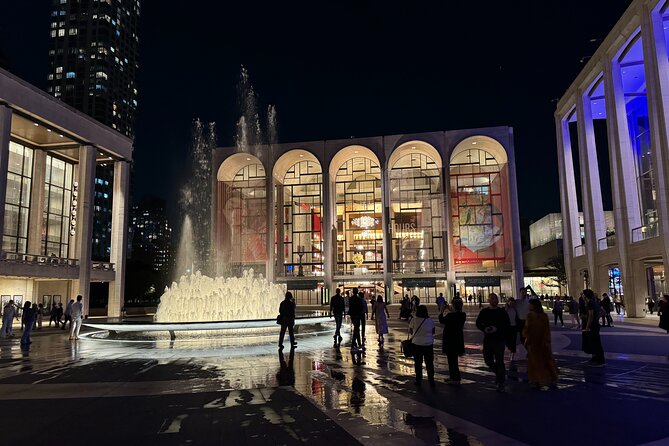
You visit or discuss David Geffen Hall, the New York City Ballet, the Metropolitan Opera House, and the Vivian Beaumont Theater. Each stop lasts roughly five minutes, so the emphasis is on concise explanation and comparison. You will see the buildings as a group and consider how their shapes, entrances, plazas, and materials serve different performing arts.
The Metropolitan Opera House is especially important to the complex’s identity. The New York City Ballet is another key part of the center’s cultural role. Even if you do not attend a performance, seeing these venues together shows how New York created a formal home for the performing arts.
The short stops are both a strength and a limitation. You get a broad look at several major buildings without spending the whole afternoon in one place. But if you are an architect, photographer, or design student who wants detailed facade study, you may wish for more time at each site.
Juilliard and the changing face of Lincoln Center
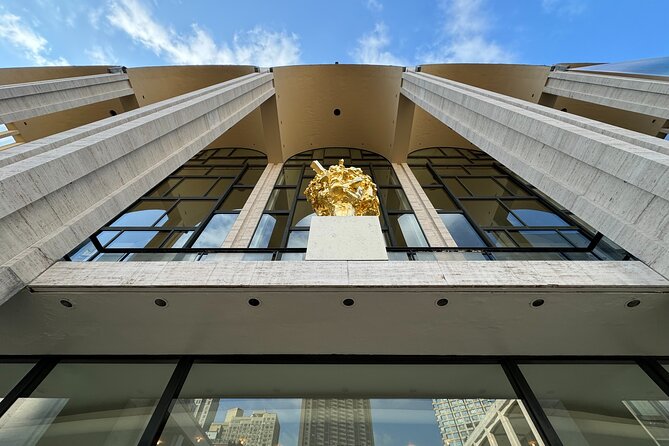
The Juilliard School gets about 15 minutes, making it one of the longer stops. The discussion covers Pietro Belluschi’s original work and the later extension by Diller Scofidio + Renfro.
That pairing gives you a clear way to think about architectural change. Instead of seeing Lincoln Center as a finished monument from one era, you can examine how a major institution adds to and modifies its buildings over time. The older and newer work reflect different approaches, yet they must function together within the same cultural campus.
This stop should appeal to anyone interested in design evolution. It also offers a useful lesson for non-specialists: architecture is not only about a building’s first design. Additions, renovations, and changes in public use can be just as revealing.
Alice Tully Hall and the smaller details
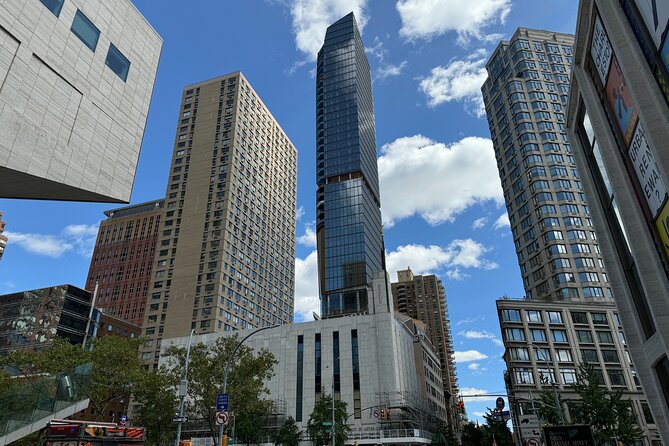
Alice Tully Hall is another brief stop within the Lincoln Center section. The building gives the guide another chance to compare performance spaces and how they meet the public areas around them.
Because the tour moves through several venues, listen for the links between stops. The value is not just in memorizing which building houses which institution. It is in noticing how the complex guides movement, frames public space, and presents culture to the city.
Your headset helps here. Personal audio equipment is included for every guest, which means you should not have to crowd close to the guide or strain to hear over traffic. This is a practical feature, especially in a place where groups can be spread across a plaza or sidewalk.
Passing Fordham University and heading south toward Hearst Tower
The route passes Fordham University before continuing toward the final stop. Since the provided details do not assign a separate visit length, consider it a landmark discussed in passing rather than a full campus tour.
Travel time is included in the two-hour duration. That keeps the experience honest, but it also means the walking portion is part of the tour’s main activity. Wear comfortable shoes and keep your schedule realistic after the finish. You are not being driven between sites, and the tour does not pause for a meal.
This stretch helps connect the cultural center to the commercial architecture farther south. It also gives the guide room to explain how the buildings fit into the larger Midtown and Upper West Side setting.
Hearst Tower provides a sharp finale
The tour ends at Hearst Tower, at 300 West 57th Street. The building is associated with architect Norman Foster and gives the walk a strong modern conclusion.
After the stone, plazas, and formal cultural buildings around Lincoln Center, Hearst Tower offers a different architectural language. Its steel-and-glass design shows how a contemporary office tower can sit beside an older building and create a new visual identity without erasing what came before.
The final stop lasts about 10 minutes. It is a fitting place to pull together the themes of the walk: old and new construction, corporate and cultural buildings, and the way Manhattan keeps adding to itself. The end point is also practical. You finish near the subway and other transportation, so you can continue to another part of the city without backtracking to Columbus Circle.
What the guide adds to the experience
The strongest part of this tour is the guide’s role. Ivan is described as pleasant, highly informed, and willing to answer a large number of questions, including detailed questions from an architect. That matters because architecture tours can easily become either too technical or too shallow.
Here, you can ask about design and urban planning while still following the story if you have no professional background. The tour is offered in English, Spanish, French, or Italian, though you should confirm your preferred language when booking.
The individual headsets are more than a minor convenience. New York sidewalks are not quiet, and a guide speaking to a group can be hard to hear. The equipment lets you keep your eyes on the buildings instead of standing shoulder to shoulder around the guide.
The group limit of 15 also supports a more personal feel. It does not guarantee a private tour, but it is far more manageable than a large procession. If you have a specific interest, such as modern additions or cultural buildings, this is the sort of setting where asking a question makes sense.
Is $49 a fair price?
At $49 per person, the price is reasonable if you want a guided introduction to several important buildings in a short window. Your fee covers the guide, taxes, other listed fees, and personal headsets. You are paying for interpretation and organization, not admission to a series of interiors.
The value is strongest for first-time visitors who would otherwise walk past Lincoln Center, Hearst Tower, and the buildings around Columbus Circle without knowing what makes them significant. It is also useful for a longtime New Yorker who wants to see familiar streets with a different eye. One particularly strong response came from a longtime local who found the buildings newly interesting after learning more about their design and place in the city.
The price may feel less attractive if you prefer to explore at your own speed. You will stop briefly at several locations, follow a fixed route, and spend part of the two hours moving between sites. A self-guided walk costs less, but it will not provide the same chance to ask questions or hear commentary clearly through a headset.
Who should book this walk?
I would choose this tour if you enjoy architecture, urban design, or the way public buildings shape a city. It also suits anyone who wants a focused Midtown and Upper West Side activity that does not take up an entire day.
You do not need to be an architect. The format works for beginners because the guide discusses broad ideas as well as building details. It is a good fit for couples, solo visitors, and small groups who prefer an organized walk with room for questions.
You may want to skip it if your priority is entering museums, attending a performance, or spending long periods inside Lincoln Center’s venues. The tour gives you exterior visits and guided discussion. It does not advertise performance tickets or extended indoor access.
The activity requires good weather. If poor weather causes cancellation, you will be offered another date or a full refund. Most people can participate, and service animals are allowed. Free cancellation is available up to 24 hours before the start time, but changes or cancellations inside that window are not refunded.
Final call: book it for context, not admission
Book the Upper West Side Art and Architecture Tour if you want a compact, question-friendly walk led by someone who can connect architectural design with New York’s urban plan. Ivan’s ability to handle detailed questions is a real advantage, and the headset system makes the commentary easier to follow.
Skip it if you want a slow photo walk or interior visits. For $49, the best value comes from the range of buildings covered, the small group, and the guide’s explanations. You finish at Hearst Tower with convenient transportation nearby, having gained a clearer way to read this part of Manhattan.
FAQ
Where does the Upper West Side Art and Architecture Tour start?
The tour starts at Columbus Circle in New York City, by the Christopher Columbus statue.
Where does the tour end?
It ends at Hearst Tower, 300 West 57th Street, New York, near the subway and other transportation.
What time does the tour begin?
The scheduled start time is 12:00 pm.
How long does the tour last?
The experience lasts approximately two hours, and travel time between stops is included.
How much does the tour cost?
The price is $49 per person.
How large is the tour group?
The activity has a maximum of 15 travelers.
Which languages are available?
In-person guiding is available in English, Spanish, French, and Italian.
Are headsets included?
Yes. Each guest receives a professional individual headset so the guide can be heard in city noise.
Does the tour include admission to the buildings?
The listed stops have no admission ticket fee, but the experience is a guided outdoor architecture walk. The information provided does not promise extended interior access or performance admission.
What happens if the weather is poor?
The tour requires good weather. If it is canceled because of poor weather, you will be offered a different date or a full refund. You can also cancel for a full refund up to 24 hours before the start time.
Just listed around New York City
- New York Princess Cruises★ 3.0 · 4 reviews
- Brooklyn Heights: New York City’s First Suburb★ 5.0 · 4 reviews
- Central Park Bike Tour with Authentic Dutch Bikes or Ebikes!★ 5.0 · 4 reviews
- New York City: Top-Rated Central Park Pedicab Tour★ 4.5 · 4 reviews
- NYC Limousine Tour By Stretch Limo-King And Queen Limo NYC★ 5.0 · 4 reviews
- JFK Airport – Manhattan Pickup / Drop Off★ 3.0 · 4 reviews
- Half-Day Civil Rights Walking Tour in Harlem with Lunch★ 5.0 · 4 reviews
- New York City: Central Park Horse Carriage 25-min Ride★ 4.4 · 4 reviews
NYC Architecture Tours, compared.

Around Manhattan Official NYC Architecture Cruise
Read our review →
Art Deco and Architecture Midtown Landmarks Tour
Read our review →



Midtown Manhattan Art and Architecture Walking Tour
Read our review →Browse the lists this tour appears in